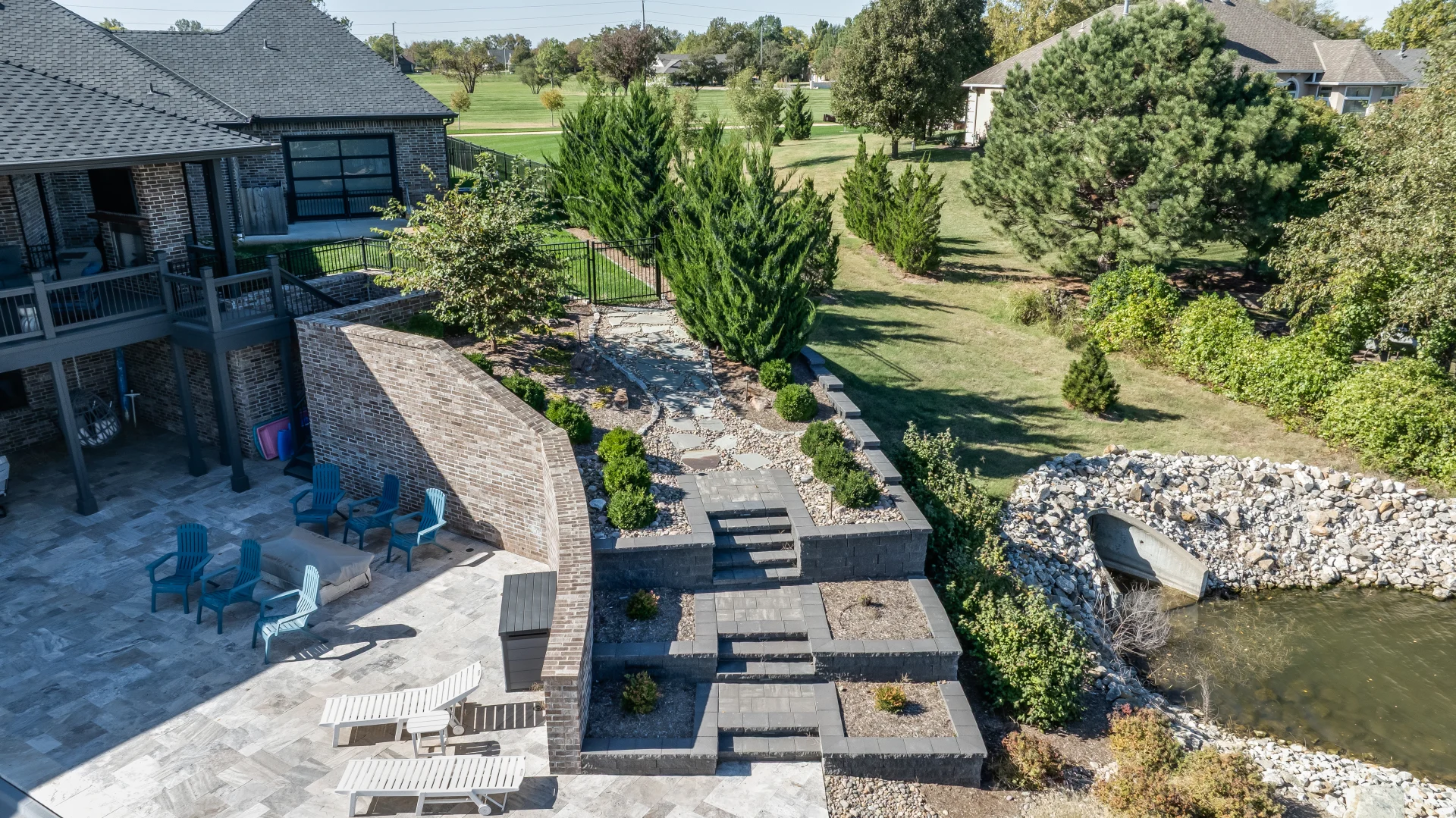
When you winterize a sprinkler system, every drop of water should come out of the pipes, valves, and heads before the ground freezes. Wichita’s average first freeze arrives between October 20 and November 4, so our crews start winterizing in mid-October and usually finish by mid-November. Meadowlark Landscape and Design handles city and well irrigation systems so your whole landscape is protected in one visit.
Why you need to winterize your sprinkler system in Wichita
Water expands when it freezes, and a sprinkler system is full of places for water to hide: underground pipes, valves, heads, and the backflow preventer above ground. A single hard freeze can crack any of them, and you usually don’t find out until spring, when the system comes on and something leaks or floods. Even if one hard freeze doesn’t damage your part immediately, constant freezing and thawing can damage the system and shorten lifespan of your sprinkler system’s parts.
Because we work on Wichita landscapes every season, we know what a winter can do to an unprotected system. Winterization every fall costs far less than the repairs it prevents. Our typical winterization starts at $95 hourly (typically accomplished within that timeframe). A burst pipe and a couple of cracked sprinkler heads could easily run $350-$400+ to repair.
When should you winterize sprinkler systems in Wichita?
According to National Weather Service data, Wichita’s average first freeze window (32 ℉) is October 20 to November 4. Some years the cold shows up sooner. We recommend calling to schedule in early-to-mid October. A light frost won’t hurt an irrigation system, but a hard freeze can, and once one is in the forecast our schedule fills quickly. Booking early puts you ahead of the rush and gives us time to prevent damage from hard freeze. Sustained colder temps are usually seen in our area by November 9 (24 ℉ or lower).
What our sprinkler winterization includes
Every property is different, and our technicians adjust to each system. A standard visit includes:
- Shutting off the water supply at the main valve
- Setting your controller to off or rain mode, so it doesn’t try to run with no water. We’ll also tell you when to switch it back on in spring
- Blowing out sprinkler systems – Clearing the water from your lines and heads, zone by zone, so nothing is left to freeze
Protecting Your Backflow Preventer
The backflow preventer keeps irrigation water from flowing back into your drinking water if you’re on a city water irrigation system. It sits above ground, so it’s the part of your system most exposed to a freeze, and one of the costliest to replace. The homeowner should ensure that the backflow is insulated properly against the elements – we can make recommendations on products if you’re unsure.
Fountain winterization
If you have a decorative fountain in your Wichita landscaping, you’ll need to winterize it before the first freeze to reduce the risk of frozen pipes or damage to the water pump and other system components. The basin of the fountain can crack or pump and pipes could become damaged if water freezes inside. If your fountain contains any fish or plants, you must remove them first before proceeding with the rest of winterization.
If your fountain is portable, drain and disassemble it before storing it. If it is stationary, drain the pipes or tubing, and open the drain in the basin. Some people use an air compressor to blow water out of their fountains, but be careful that you don’t overdo it and damage the internal mechanisms. To prevent your fountain pipes from freezing, you can add RV antifreeze using a garden hose transfer pump. Disconnect the power and clean the pump to prevent algae build-up. Be sure to clean leaves out; a leaf blower works well for this.
If you can, elevate your fountain to prevent the base from cracking. Store it in a dry location, preferably with a non-plastic cover.
Decorative pond winterization
If you have a decorative pond with fish in your landscape, you will need to prepare it for winter to protect your swimming friends. Follow these steps for DIY pond winterization in Wichita.
- Remove leaves and debris that have collected in your pond using a net. Be sure to scoop all the way to the bottom.
- Put a pond net over your pond to prevent any additional debris from accumulating and decaying. After the leaves are done falling, you can remove the net.
- Prepare your pond’s plant life for winter. This includes trimming back any dead foliage that could decompose in the water and trimming your water lilies.
- Add cold-water bacteria to keep your pond water clear and free of decaying plant matter and other algae.
If you leave your pond’s water pump running, be sure to check that no ice blockages form. Keep a pond de-icer on hand just in case. If you shut down your pond for the winter, you’ll need to take additional steps, including removing your pump from the pond, draining any plumbing, and cleaning the filter. You may also need to add a recirculating pump to your pond so your fish – if you have them – get plenty of oxygen from the water around them. Remember to prepare your fish for hibernation by feeding them until the temperature drops below 50 degrees, which is when their metabolism and digestion slows.
Frequently Asked Questions
Schedule Your Sprinkler System Winterization with Meadowlark
Wichita’s average first freeze window opens October 20, and our fall calendar fills fast. Meadowlark Landscape and Design is a full-service lawn care and landscaping company that winterizes city and well irrigation systems, fountains, and decorative ponds, and offers landscaping services year-round. Call (316) 880-0227 or contact us to reserve your spot.