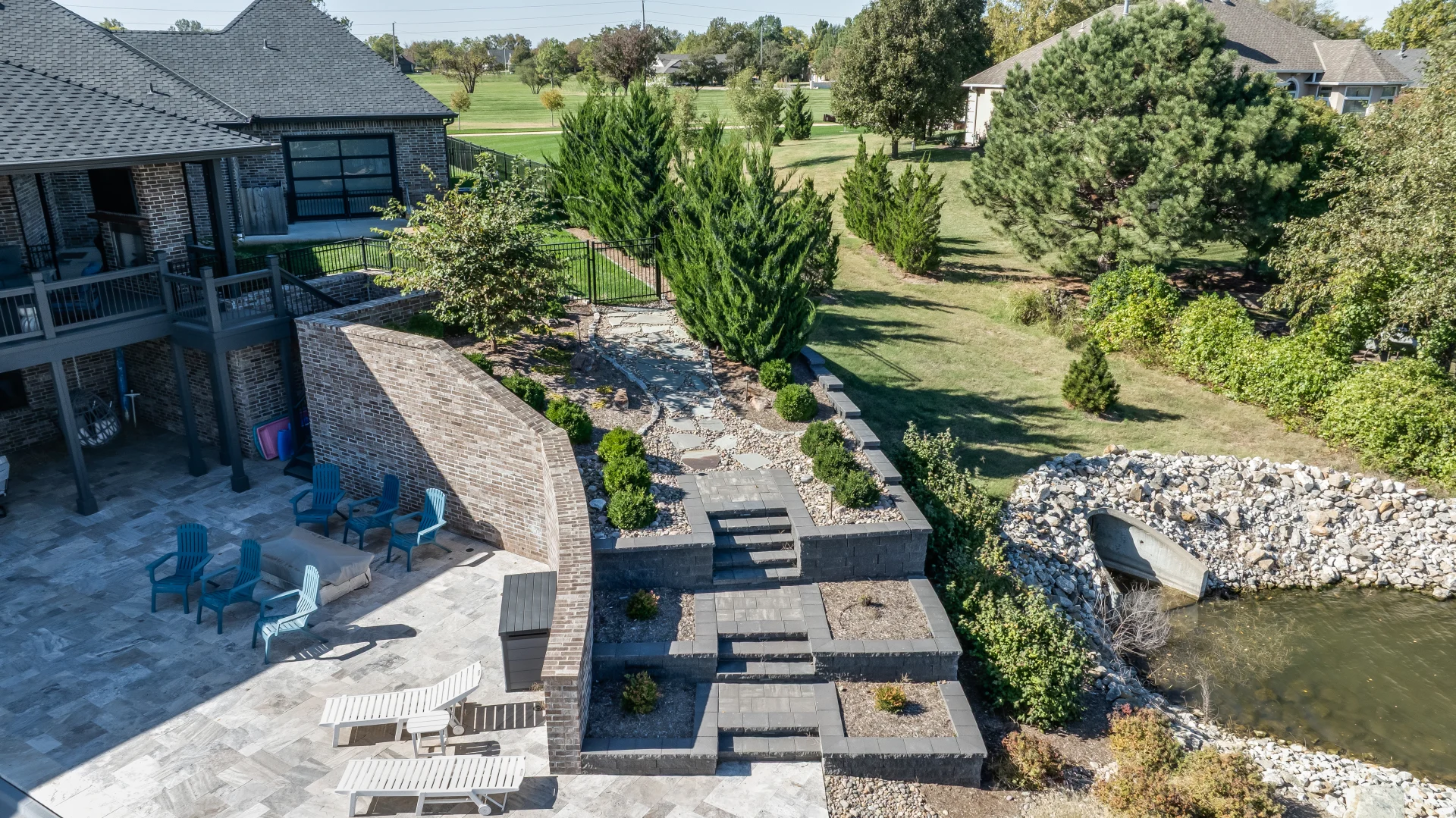
Your Autumn Landscape Checklist for Wichita-Area Yards
Fall in Wichita is one of the best times to get your landscape in order before winter arrives. Cooler temperatures make outdoor work more comfortable, while your plants and lawn are preparing for the dormant season ahead.
But fall landscaping involves more than raking a few leaves. Once the heat of summer breaks, many plants, trees and shrubs in our zone (Zone 7A) are wired to do their root building, energy storage and thickening. From cleaning out landscape beds and preparing plants for winter to checking irrigation and clearing debris from patios and walkways, a little seasonal maintenance can help protect your investment and give your property a cleaner, healthier appearance heading into winter. And what you do in these months can make a difference in how lush and healthy your landscape and lawn is next spring.
If you’re wondering what should be on your fall landscaping checklist, here are some of the most important tasks for Wichita homeowners.
1. Aeration & Overseeding
For tall fescue and Kentucky bluegrass (the most common Wichita lawns), September is the single most important month of the year for lawn care. Aerating and overseeding is best done on cool-season lawns around Labor Day through early October, while soil is still warm enough for germination. October 15 is generally considered the cutoff for safely overseeding tall fescue in our area — later plantings can still work but success rates drop, mostly due to seedlings drying out before they mature or cold injury.
Schedule Your Aeration/Overseeding Today!
2. Fall Fertilization & Weed Control
In early-to-mid September, quick-release nitrogen fertilizer should be applied to cold-season grasses. Warm-season grasses (zoysia, bermuda) should not be fertilized in fall — their feeding window closes by August, and late nitrogen can reduce winter hardiness.
Broadleaf weeds (such as dandelion, henbit, chickweed) are easier to control in fall than spring, since they’re actively moving nutrients into their root systems. Spray on a day above 50°F with no rain or irrigation for 24 hours. If you’re not overseeding, a pre-emergent for winter annual weeds can be applied in September and watered in.
Schedule Your Lawn Treatment Today!
3. Cleanup Landscape Beds & Mulch
Your landscape beds can accumulate weeds, fallen leaves, dead plant material, and other debris throughout the growing season as well as lose mulch volume after heavy summer rains and winds. A thorough fall landscape cleanup is a great opportunity to refresh these areas before winter.
Depending on your landscape, cleanup may include:
- Removing weeds and unwanted plant growth
- Clearing leaves and debris
- Removing dead or damaged plant material, or plants that showed disease or pest problems
- Cutting back select perennials
- Cleaning up around trees and shrubs
- Refreshing the overall appearance of planting beds
- Adding mulch to keep plants moist and avoid cold damage during winter
Not every plant should be cut back in the fall, however. Some grasses and perennials provide valuable winter structure and habitat, so cleanup should be based on the specific plants in your landscape.
Not sure what should stay and what should go? Meadowlark’s landscape professionals can help determine what your plants need before winter and take care of the seasonal cleanup for you.
4. Planting & Fall Care – Trees & Shrubs
September and October is an excellent time to plant new trees and shrubs in Kansas. This timing allows the roots to establish at the furthest point from the scorching summer heat, building healthier and more sustainable plants. Fall is also a good time to take a closer look at the health and structure of your existing trees and shrubs.
You Should Look for:
- Dead or damaged branches
- Signs of insects or disease
- Broken limbs after summer storms
- Overgrown or crowded branches
- Plants showing signs of stress
Some trees and shrubs benefit from light fall treatments or pruning, but most are better left alone until their heavier dormancy season in winter to avoid disease and pest issues. Don’t prune your spring flowering shrubs (lilac, azalea, etc) now as their flower buds are already set and fall pruning removes next spring’s blooms.
Trees that are well-suited to fall pruning (wait until October to ensure pest dormancy) to avoid common disease are Elms (American, lacebark/Chinese elm) and Oaks, particularly pin oak, red oak and shumard oak.
Meadowlark provides customized tree and shrub care, including targeted fertilization and treatments for insects, mites, and diseases.
If you see something concerning in your trees or shrubs, schedule a professional tree and shrub evaluation before winter.
5. Remove Leaves, But Don’t Forget Your Landscape Beds
Leaves are a natural part of fall, but allowing a thick layer to sit on your lawn or hardscape for an extended period can create problems.
Leaves can block sunlight and trap moisture against surfaces and plants. Keeping up with leaf removal also makes it easier to see the condition of your lawn, planting beds, patios, and walkways.
However, fall cleanup doesn’t necessarily mean removing every leaf from every part of the landscape. Some leaves and plant material can provide beneficial habitat and winter protection when managed appropriately.
The goal is a thoughtful cleanup, rather than simply removing everything in sight. Mulch-mowing your leaves into your lawn is recommended to allow the material filter back organic matter into the turf.
6. Check Your Irrigation System
Before winter, make sure your irrigation system is in good working order. You’ve had a chance to see any problem areas in your lawn caused by heat stress and may identify some areas that need additional coverage that weren’t evident when you did your spring checks.
Throughout the growing season, sprinkler heads can become damaged, clogged, or misaligned. Plants may also grow and change the way water reaches different areas of your landscape.
A fall irrigation check can help identify:
- Broken or leaking sprinkler heads
- Uneven coverage
- Areas receiving too much or too little water
- Damaged components
- Changes needed based on your landscape
Meadowlark provides irrigation services as part of its full-service approach to landscape maintenance and can help keep your system operating properly throughout the year. It’s not typically recommended to winterize your irrigation until closer to late October or early November as we’re seeing warmer autumns, but it’s never a problem to go ahead and get on our schedule.
7. Assess & Refresh Your Landscaping
Fall is a great time to look at your landscape as a whole and assess what needs have changed and what you may want to refresh in the coming year. A few questions to consider:
- Are your landscape beds and outdoor living areas still working with the way you use your property?
- Are plants in your landscape beds overcrowded?
- Have weeds taken over areas of your lawn or landscaping?
- Does an area need new mulch or another finishing material?
- Are there areas of your lawn that are struggling due to excessive shade or sun?
A seasonal cleanup and assessment can reveal areas that may benefit from a larger landscape refresh. For homeowners considering changes next year, fall is also a great time to start thinking about what you’d like to improve in the spring.
Ready for more than a cleanup? Meadowlark can help turn an overgrown or outdated landscape into a thoughtfully designed outdoor space.
8. Don’t Forget Your Hardscapes
Your landscape isn’t just plants and grass. Patios, walkways, retaining walls, outdoor kitchens, and other hardscape features also benefit from seasonal attention.
Take a walk around your property and look for:
- Leaves and debris collecting in corners
- Weeds growing between pavers
- Dirt or buildup on patios and walkways
- Areas where water isn’t draining properly
- Cracks, shifting, or other changes in hardscape surfaces
Keeping these areas clean makes your property look better now and makes it easier to identify potential problems before they become larger repairs.
9. Keep an Eye on Drainage
Fall is a good time to pay attention to where water goes when it rains.
Walk around your property after a rainfall and look for standing water, excessive runoff, or areas where soil is washing away.
Problems you notice now may become more significant during winter freeze-thaw cycles or heavy spring rains.
If water is pooling near your home, patio, or landscape beds, don’t wait until spring to investigate.
If you’ve been seeing standing water in your yard, Meadowlark provides grading and drainage solutions designed to improve water flow and protect your landscape.
Your Wichita Fall Landscaping Checklist
Before winter arrives, take a walk around your property and check these items off your list:

Click to download the PDF
If that list feels like a lot, you’re not alone.
Let Meadowlark Handle Your Fall Landscape Cleanup
Fall cleanup is one of those projects that’s easy to put off, but getting your property cleaned up before winter can make a noticeable difference in both the appearance and long-term health of your landscape.
Meadowlark Landscape & Design provides fall landscape cleanup in Wichita and the surrounding area, helping homeowners prepare their lawns, landscape beds, trees, and outdoor spaces for the season ahead. Their maintenance services include seasonal cleanups as well as landscape bed maintenance, lawn care, irrigation, tree and shrub care, and more.
Instead of spending your fall weekend hauling leaves, pulling weeds, and figuring out which plants need attention, let a professional take care of the work.
Ready to check “fall landscaping” off your list? Contact Meadowlark Landscape & Design to schedule your fall cleanup and get your Wichita landscape ready for winter.
Related:
Prepare Wichita Landscape for Winter
5 Best Trees To Plant for Fall Color in Wichita
Why Hiring Meadowlark Landscaping for Lawn Maintenance Is Worth It