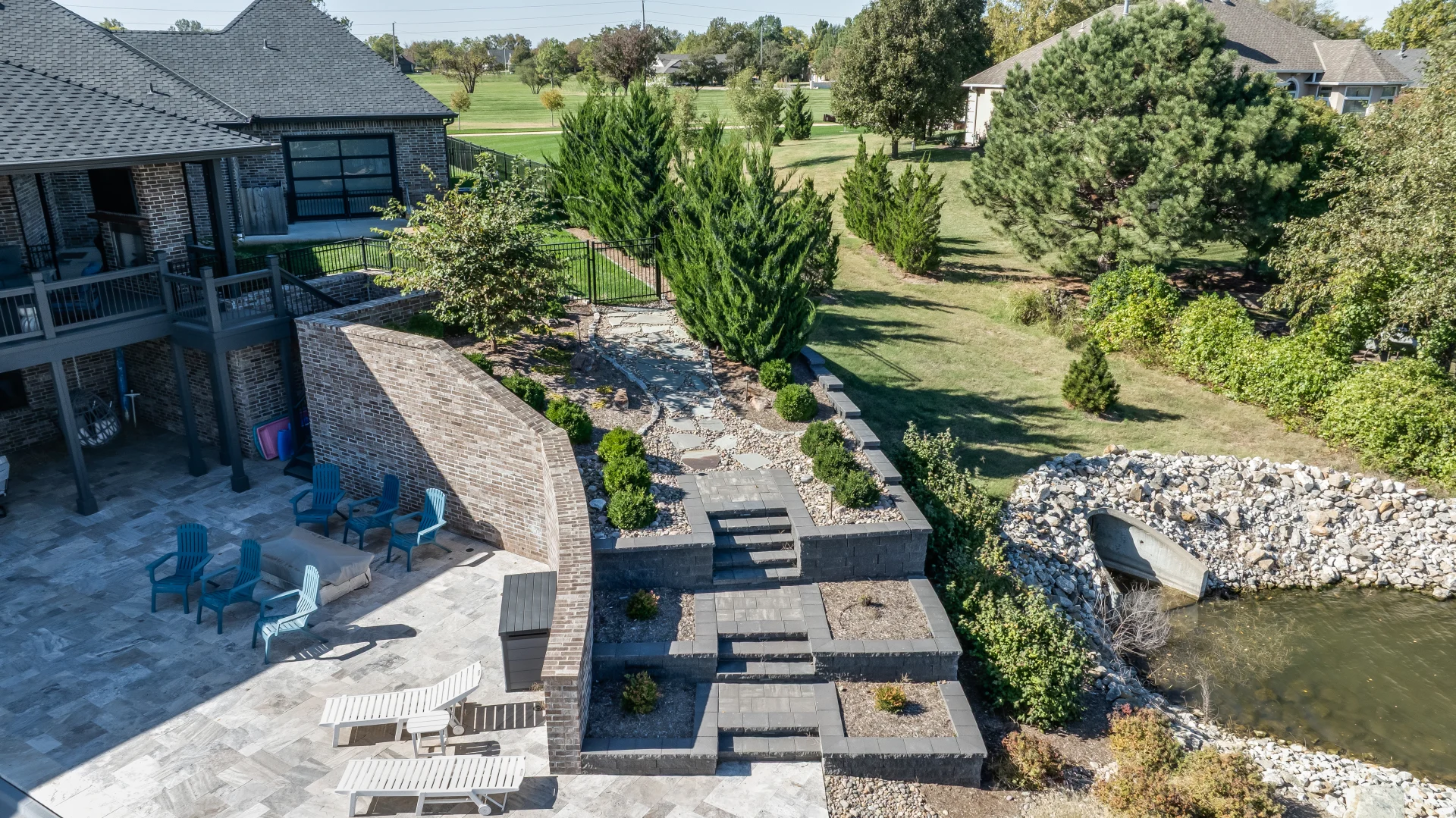
Winter in Wichita isn’t just cold, it’s unpredictable. One week may bring mild temperatures, and the next can drop well below freezing. Managing your winter landscaping correctly is vital because these deep freezes and frequent freeze-thaw cycles can have a major impact on your yard.
Understanding how winter affects your yard can help you protect your investment and prepare for a healthy spring.
Freeze-Thaw Cycles: The Biggest Winter Challenge
In Kansas, it’s not just the cold that causes problems, it’s the constant freezing and thawing. When soil freezes, moisture inside it expands. As it thaws, the soil contracts and shifts. This repeated movement can lead to:
- Soil heaving around plants and hardscapes
- Shifting pavers or stonework
- Cracks in poorly installed hardscaping
- Exposed plant roots
Landscapes built with proper base preparation, drainage, and quality materials are much better equipped to handle these seasonal shifts.
How Winter Landscaping is Affected by Freezes
Even hardy plants can struggle during deep freezes, especially when temperatures drop quickly.
Common winter plant stress includes:
- Root damage from frozen, compacted soil
- Winter burn on evergreens due to cold winds and sun exposure
- Branch breakage from ice or heavy snow
- Desiccation, when plants lose moisture faster than frozen ground can replace it. To help protect landscapes from moisture stress, we offer a treatment called Moisture Manager, designed to support plant health while also reducing overall water usage.
Trees are especially vulnerable during harsh winters, which is why fall preparation is so important. Deep root feeding in the fall helps strengthen a tree’s root system and improves nutrient storage before the ground freezes. This extra support allows trees to better withstand winter stress and bounce back more successfully in spring.
Native and climate-adapted plants are more resilient, which is why thoughtful plant selection is so important in Kansas landscapes. Meadowlark Landscape & Design can help!
Lawn Impact After a Hard Freeze
Your lawn may look brown and lifeless in winter, but it’s still affected by extreme cold.
Deep freezes can:
- Damage shallow root systems
- Cause soil compaction
- Lead to snow mold if snow lingers too long
- Create uneven areas as soil shifts
Proper fall preparation and healthy soil help turf bounce back more quickly in spring. A proactive lawn care program, like our 5-step maintenance plan, applies the right fertilizers and growth-stimulating hormones at key times of the year to encourage deeper, stronger root systems, making turf more resilient and less susceptible to damage from deep winter freezes.
Hardscaping and Winter Weather
Patios, walkways, and retaining walls also feel the effects of winter. Water that seeps into small cracks can freeze, expand, and cause gradual damage over time.
Well-installed hardscaping systems include:
- Proper base layers for stability
- Edge restraints to prevent movement
- Drainage solutions to move water away
Material quality also plays a major role in winter durability. At Meadowlark, we use Unilock products that are manufactured to withstand harsh weather conditions, including freeze–thaw cycles common in Kansas. Their advanced production methods and high-performance materials help maintain structural integrity and long-term appearance, even through extreme seasonal changes.
These details make a big difference in how your outdoor features hold up year after year.
Drainage Matters Even in Winter
It might seem like drainage is only a warm-weather concern, but winter melt can be just as damaging. When snow and ice melt during a warm spell, that water has to go somewhere. Without proper grading and drainage:
- Water can pool near foundations
- Ice patches can form on walkways and driveways
- Saturated soil can weaken plant roots
A well-designed landscape directs water safely away from your home in every season.
What Homeowners Can Do
While most winter damage prevention starts with good design and installation, homeowners can still take steps to help protect their landscape:
- Avoid heavy foot traffic on frozen grass
- Gently brush heavy snow off shrubs (don’t shake frozen branches)
- Keep drainage areas clear of debris
- Wait until spring to prune freeze-damaged plants
If you notice shifting pavers, pooling water, or plant damage after winter, it may be time for a professional evaluation.
Landscapes Built for Kansas Weather
At Meadowlark Landscape & Design, we plan every project with Wichita’s climate in mind. From proper grading and drainage to durable materials and climate-appropriate plants, our landscapes are built to withstand deep winter freezes and come back strong in spring.
If winter has revealed problem areas in your yard, now is the perfect time to plan improvements before the busy season begins.