
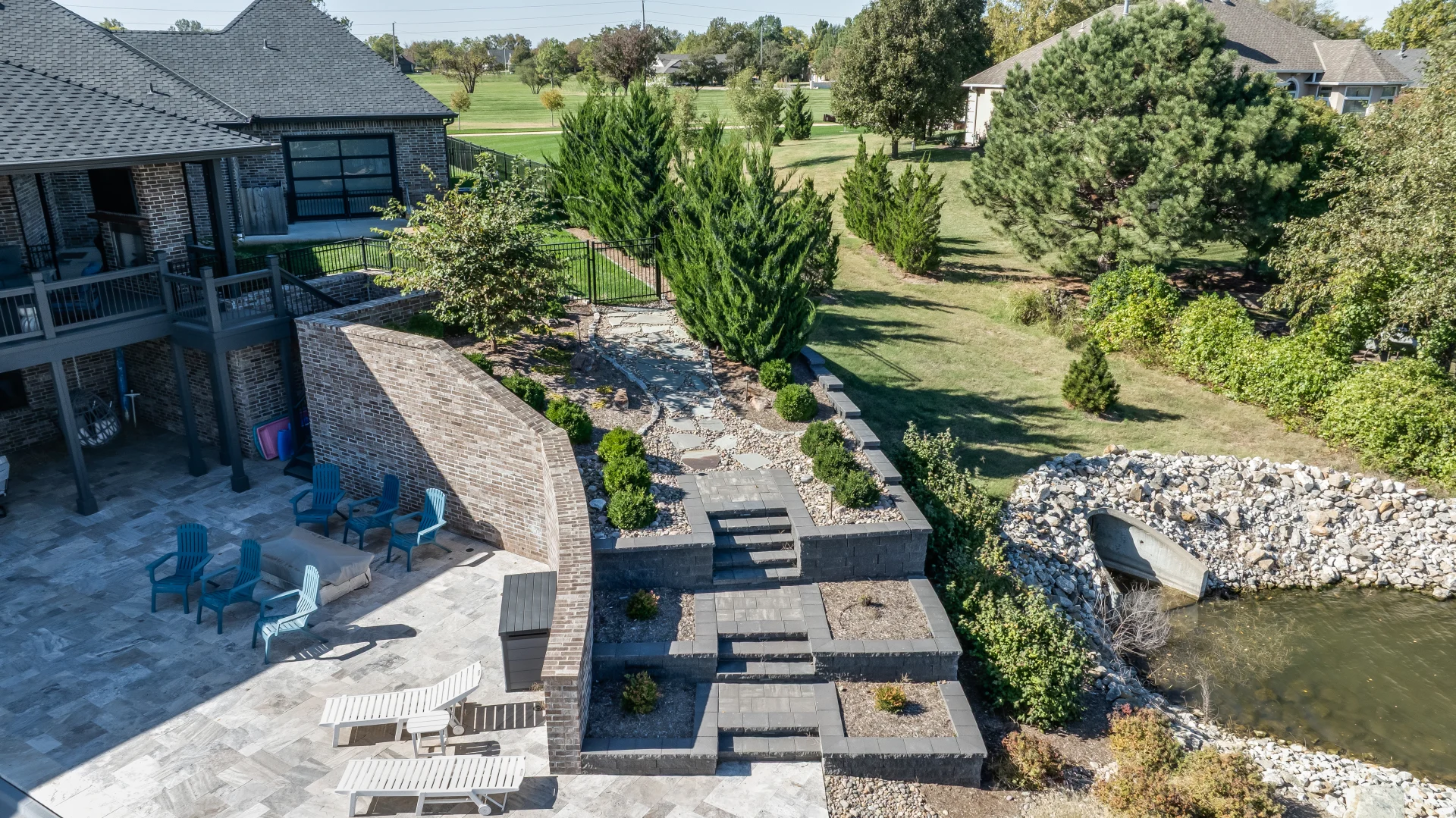
A sloped yard can create challenges that a flat backyard simply doesn’t have. Mowing can be difficult, rainwater can quickly wash away soil, and an awkward slope may leave you with a large portion of your property that isn’t particularly useful.
But a slope doesn’t have to be a landscaping problem.
With thoughtful sloped yard landscaping, you can turn an uneven backyard into a beautiful, functional outdoor space. Retaining walls, terraced gardens, stairs, landscape plants, drainage solutions, and carefully designed hardscaping can transform a difficult slope into one of the most interesting features of your property.
If you’re looking for sloped yard landscaping ideas in Kansas, here are some options to consider.
What Problems Can a Sloped Yard Cause?
Before deciding what to add to a sloped landscape, it’s important to understand why the slope is creating problems in the first place.
Erosion
Heavy Kansas rain can send water rushing down a slope, carrying soil and mulch with it. Combined with heavy drought and heat, your soil can begin to crumble. Over time, this can expose plant roots, damage landscape beds, and gradually change the shape of the yard.
Difficult Maintenance
Steep slopes can be challenging, and sometimes unsafe, to mow. They can also make routine landscaping tasks such as planting, weeding, and maintaining beds more difficult.
Drainage Issues
Water naturally travels downhill, which means a sloped yard can direct water toward your home, patio, foundation, or other areas where you don’t want it.
Limited Usable Space
A steep backyard isn’t always conducive to outdoor entertaining, play, gardening, or simply relaxing. Without thoughtful design, you may end up with a large portion of your property that isn’t being used.
The good news is that landscape design can address many of these challenges while making the space significantly more attractive.
1. Create Terraced Levels

One of the most effective sloped yard landscaping ideas is to break one large slope into several smaller, usable levels.
Terracing can create distinct areas for:
- Patios and outdoor entertaining
- Garden beds
- Lawn areas
- Fire features
- Seating
- Play spaces
- Plantings
Instead of looking at the slope as one large incline, terraced landscaping transforms it into a series of intentional spaces.
Terraced Garden Ideas
Terraced gardens can be particularly attractive for homeowners who enjoy gardening. Each level can feature different plants, textures, or colors while retaining walls help stabilize the soil.
Terraces can also incorporate raised planters, ornamental grasses, shrubs, flowers, and other plants that thrive in your property’s specific conditions.
Have a steep or awkward area you’re not sure how to use? Meadowlark can help develop a custom landscape design that works with your property’s existing grade.
2. Add Retaining Walls

Retaining walls are another popular solution for sloped properties. Rather than allowing the entire yard to remain on one continuous incline, retaining walls can hold back sections of soil and create flatter areas that are easier to use and maintain.

Retaining Wall Ideas for a Sloped Backyard
Depending on your property and design goals, retaining walls can be used to:
- Create multiple levels
- Support planting beds
- Define outdoor living spaces
- Reduce the severity of a slope
- Help manage erosion
- Create seating ledges
- Add architectural interest
Retaining walls don’t have to look purely functional. The right materials, plantings, lighting, and design details can make them a major visual feature of the landscape.
Considering a retaining wall? Our team can help determine the appropriate wall design and materials for your property’s slope.
3. Use Stairs and Steps to Improve Accessibility

If a slope separates different areas of your backyard, stairs can make the entire property easier and safer to navigate.
Instead of trying to walk directly up and down a steep hill, thoughtfully designed steps can create a natural connection between different levels.
Steps can be constructed using materials that complement your existing landscape and hardscape, including natural stone, concrete pavers, or other hardscape materials.
For a more integrated appearance, stairs can be surrounded by planting beds, retaining walls, lighting, or groundcover.
4. Consider a Rock Garden

A steep slope isn’t always the best place for traditional lawn or delicate plantings.
Rock gardens can be a beautiful, lower-maintenance alternative that works particularly well on sloped properties. Large boulders, decorative river rock, and carefully selected plants can work together to create a natural-looking landscape while helping break up the visual impact of a large slope.
Rock gardens can incorporate:
- Decorative stone
- Boulders
- Ornamental grasses
- Groundcovers
- Shrubs
- Perennials
- Drought-tolerant plants
The key is choosing plants and materials that complement one another rather than simply covering the slope with rock.
5. Choose Plants That Work With the Slope

Plant selection is especially important for a sloped yard. The right plants can help stabilize soil while adding color, texture, and visual interest. They can also create plant beds where mowing would be difficult, saving your back the challenge. Depending on the conditions, homeowners may consider plants with strong root systems, groundcovers, ornamental grasses, shrubs, and other plants suited to Kansas’ climate.
When selecting plants, consider:
- Sun exposure
- Soil conditions
- Water requirements
- Mature plant size
- Root structure
- Maintenance needs
- Seasonal interest
In Wichita, natural grasses are an excellent choice for erosion control due to their deep roots. They’re also hardy once established. Little Bluestem, Karley Rose Oriental fountain grass, or blonde ambition blue grama grass would be good choices.
When looking for seasonal color, think prairie wildflowers that thrive well in our tough conditions. Purple coneflower, black-eyed Susans, Coreopsis, and butterfly milkweed all form deep, strong root systems. For rocky areas, creeping phlox and sedum are reliable and can withstand lots of heat but not be overly bothered by water runoff during storms. Many of the perennials listed in our Drought Tolerant Planting blog would be good choices.
Junipers, shrub roses, and Little Henry sweetspire are all shrub choices that can do well layered within sloped mulch beds. Planting in layers can also make a steep landscape feel more intentional. Lower-growing plants can be placed toward the front of a bed while taller shrubs and trees create a backdrop.
6. Think Vertically With Decks and Outdoor Living Spaces

A steep or sloped backyard doesn’t necessarily mean you have to give up on having a patio or entertaining area. In some properties, a lower-profile deck, elevated patio, or multi-level hardscape can work with the existing grade to create usable outdoor living space.
Instead of flattening the entire yard, the design can follow the natural slope.
Depending on the property, this could mean creating:
- An upper-level seating area
- A lower patio
- A dining area
- A fire feature
- A small outdoor kitchen
- Connecting stairs or pathways
Working with the existing grade can often create a more natural and visually interesting result than trying to make the entire property flat.
Want to turn a difficult slope into an outdoor living space? Meadowlark can help incorporate hardscaping and outdoor living features into a comprehensive landscape design.
7. Don’t Overlook Backyard Drainage

Drainage should be one of the first considerations when landscaping a sloped yard, not an afterthought. Because water naturally moves downhill, improperly managed runoff can lead to erosion, standing water, saturated planting beds, or water collecting near your home’s foundation.
Depending on the property, backyard drainage solutions may include:
- Grading adjustments
- Drainage channels
- French drains
- Catch basins
- Retaining walls
- Drainage swales (channels)
- Strategic planting
- Other water-management solutions
The appropriate solution depends on where water is coming from, where it is going, and how much water the property receives.
Seeing water pooling or washing soil away? Meadowlark can evaluate your property’s drainage and recommend a solution designed around your landscape’s unique grade.
8. Use Hardscaping to Define the Space

Hardscaping can help turn a difficult slope into a series of purposeful spaces.
Paver patios, walkways, retaining walls, steps, seating walls, and other features can create structure while making the landscape more functional.
Changing materials can also help visually define different areas. For example, a paver patio can transition into a planting bed, which then connects to a stone pathway leading to another level of the backyard.
Rather than seeing the slope as an obstacle, good hardscape design uses the elevation to create visual interest.
9. Refine With Landscape Lighting

Sloped landscapes can become particularly dramatic after dark.
Landscape lighting can highlight retaining walls, steps, trees, boulders, pathways, and other architectural features while also making the property easier to navigate at night.
Pathway and step lighting can improve visibility, while uplighting can emphasize mature trees or focal points throughout the landscape.
Lighting can also help visually connect multiple levels of a terraced backyard.
A Sloped Yard Doesn’t Have to Stay a Problem
A steep or uneven backyard may create challenges, but it also presents opportunities for a more creative landscape design.
Instead of fighting the slope, consider using it to your advantage with:
- Terraced landscaping
- Retaining walls
- Steps and pathways
- Rock gardens
- Slope-friendly plants
- Multi-level patios and decks
- Outdoor living spaces
- Drainage solutions
- Landscape lighting
The best solution will depend on the severity of your slope, your property’s drainage, existing vegetation, and how you want to use the space.
Turn Your Sloped Yard Into a Functional Outdoor Space

If your Wichita-area backyard is difficult to mow, prone to erosion, or simply isn’t being used to its full potential, professional landscape design can make a significant difference.
Meadowlark Landscape & Design can help you develop a plan that works with your property’s natural grade while addressing practical concerns such as erosion, drainage, access, and maintenance.
From retaining walls and terraced gardens to hardscaping, drainage solutions, and outdoor living spaces, we can help transform a challenging slope into a landscape you actually want to spend time in.
Ready to make better use of your sloped backyard? Contact Meadowlark Landscape & Design to schedule a consultation and start planning your landscape transformation.


