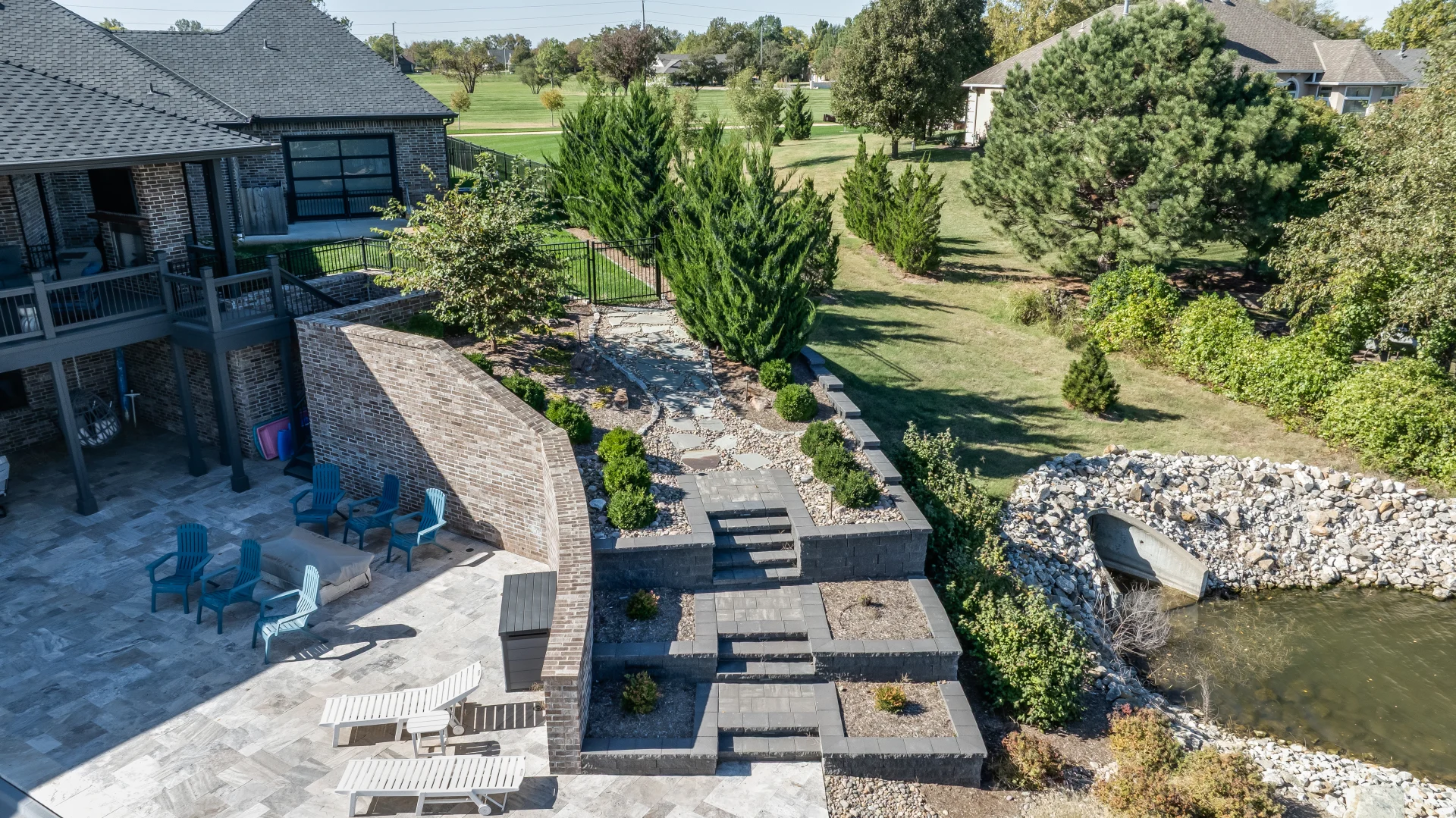
By August, your Wichita lawn has made it through some of the toughest conditions of the year. Between summer heat, foot traffic, drought stress, and the occasional heavy rain, it’s common for lawns to look a little thinner or more tired than they did in spring.
If your lawn has bare patches, thinning grass, compacted soil, or areas that simply aren’t growing as well as they used to, late summer is the perfect time to start thinking about lawn aeration and overseeding.
For many Wichita lawns, these two services work together to create thicker, healthier turf going into fall and the following spring.
And while August may not be the ideal time to put down new grass seed, it is an ideal time to evaluate your lawn and plan for fall.
What Is Lawn Aeration?
Over time, soil can become compacted from foot traffic, mowing, weather, and everyday use. Compacted soil has fewer air pockets, making it more difficult for water, oxygen, and nutrients to reach grass roots.
Lawn aeration, particularly core aeration, helps relieve this compaction by removing small plugs of soil throughout the lawn.
These openings allow:
- Water to penetrate deeper into the soil
- Oxygen to reach the root zone
- Nutrients to reach grass roots more effectively
- Grass roots to grow into less-compacted soil
- New grass seed to make better contact with the soil
Aeration can be especially beneficial for lawns that receive heavy foot traffic or have dense, compacted soil.
Why Pair Aeration With Overseeding?
Aeration creates the openings. Overseeding fills them with new grass.
Overseeding is the process of spreading grass seed over an existing lawn to help improve turf density without completely replacing the lawn.
This can be helpful if your Wichita lawn has:
- Thin or sparse areas
- Small bare spots
- Uneven turf density
- Damage from summer stress
- Areas that need additional grass to fill in
When aeration and overseeding are performed together, the holes created by aeration give new seed improved access to the soil. That increased seed-to-soil contact can give grass seed a better opportunity to germinate and establish.
Does Your Lawn Need Aeration or Overseeding?
Not every lawn has the same needs. Use this quick guide to help identify what may be happening in your yard:
| If you notice… | Your lawn may benefit from… |
| Thin or patchy grass | Overseeding |
| Hard or compacted soil | Core aeration |
| Water running off instead of soaking in | Aeration + irrigation evaluation |
| Bare areas after summer stress | Overseeding |
| Heavy foot traffic | Aeration |
| An established lawn that needs more density | Aeration + overseeding |
Keep in mind that these symptoms can have multiple causes. If your lawn is struggling because of disease, insects, drainage, irrigation, or another underlying issue, aeration and overseeding alone may not solve the problem.
That’s why evaluating the lawn first is so important.
Why August Is the Time to Start Planning
August might not seem like the time to think about planting grass, but it’s an important month for planning your fall lawn care.
For Wichita homeowners with cool-season turf, late summer into early fall offers an important window for lawn renovation. Kansas State University recommends September as the best time to plant tall fescue in Kansas. Planting too early can expose new grass to excessive heat, while waiting too long can leave new seedlings vulnerable to cold temperatures.
A quick note about timing: This recommendation applies primarily to tall fescue and other cool-season grasses commonly found in Wichita. Warm-season grasses, such as Bermuda and zoysia, follow a different growth cycle and should generally be established much earlier in the season, while soil temperatures are consistently warmer.
That means August is a great time to evaluate your lawn, identify areas that need attention, and schedule your lawn aeration and overseeding before the ideal fall window arrives.
What Type of Grass Is Common in Wichita?
Grass type matters when determining whether overseeding is appropriate and when it should be done.
Tall fescue is a popular choice for Kansas lawns because it performs well across a variety of conditions, including sun and partial shade, and has good tolerance for heat and drought once established.
Wichita lawns can also contain warm-season grasses such as Bermuda and zoysia. These grasses follow a different growth cycle and require a different approach to renovation and overseeding.
Before putting down new seed, it’s important to know what type of turf you have and determine whether overseeding is the right solution.
Not sure which grass is growing in your yard? Meet with one of our lawn care managers to determine which varieties will perform best on your property.
How Does the Lawn Aeration and Overseeding Process Work?
A successful lawn renovation involves more than simply putting seed on top of existing grass.
1. Evaluate the Lawn
First, determine why the lawn is thin or struggling. Compaction, irrigation issues, poor soil conditions, shade, pests, disease, and improper maintenance can all contribute to weak turf.
Fixing the underlying problem is an important part of getting lasting results.
2. Aerate the Soil
Core aeration removes small plugs of soil throughout the lawn. This relieves compaction and creates openings where water, oxygen, nutrients, and grass seed can reach the soil.
3. Apply the Right Seed
The right grass seed depends on your existing turf, the amount of sunlight, soil conditions, and how you use the lawn. For a successful overseeding project, seed selection should be based on the specific conditions of your property, not simply whichever grass seed is available at the store.
4. Establish the New Grass
Newly seeded areas need consistent moisture while the seed germinates and begins developing roots. Once the new turf is established, ongoing mowing, watering, and fertilization help it develop into a dense, healthy lawn.
Don’t Forget About Irrigation
Water is critical to successful overseeding. New grass seed needs consistent moisture to germinate, and young grass needs continued care while its root system develops.
If your irrigation system has uneven coverage, broken sprinkler heads, or areas that receive too much or too little water, those issues should be addressed before or during your lawn renovation. A properly functioning irrigation system can make a significant difference in helping new grass establish evenly.
At Meadowlark, our team provides irrigation services designed to keep your system operating efficiently throughout the year. Regular monitoring and seasonal adjustments help ensure your lawn receives the proper amount of water as temperatures and weather conditions change.
When combined with fertilization, soil amendments, Moisture Manager applications, weed control, and other services included in our comprehensive lawn care programs, a well-maintained irrigation system helps create the ideal conditions for a healthier, stronger lawn.
Get your irrigation system up to par. Reach out to our team for a complete irrigation evaluation to ensure your lawn receives the right amount of water throughout the year.
Aeration & Overseeding Are Just the Beginning
Getting new grass established is only part of maintaining a healthy Wichita lawn. After aeration and overseeding, your lawn still needs the right nutrients, weed control, and seasonal care to maintain its density and health.
That’s where Meadowlark’s 5-step lawn care program can help.
A properly timed lawn care program provides ongoing seasonal applications designed around the needs of your lawn throughout the year. Fertilization and weed-control applications help support healthy turf while reducing competition from unwanted plants.
Aeration and overseeding can give your lawn a fresh start, while a consistent maintenance program helps protect that investment.
Give Your Wichita Lawn a Fresh Start This Fall
If your lawn has looked a little worse for wear this summer, you don’t necessarily need to start over. Lawn aeration and overseeding can help improve turf density, address soil compaction, and create better conditions for a healthier lawn.
Planning ahead in August gives you time to address problem areas and prepare for the ideal fall growing window.
Together, we’ll create a customized strategy designed specifically for your property so your lawn can come back stronger this fall and thrive next spring. Contact Meadowlark Landscape & Design today to schedule your consultation.